Trina Garnett
Just MercyTrina Garnett was a child shaped by poverty and relentless violence long before Pennsylvania’s mandatory sentencing laws condemned her to prison for life. Her story follows the accumulation of harm across home, community, and courtroom, and the eventual change that made her eligible for parole after thirty-eight years behind bars.
Identity and Background
Trina was the youngest of twelve children in the poorest section of Chester, Pennsylvania, a financially distressed city outside Philadelphia. Nearly 46 percent of Chester’s children lived below the federal poverty level, and its public school system ranked last among Pennsylvania’s 501 districts. Those conditions formed the background to a family life dominated by violence rather than security.
Her father, Walter Garnett, was a former boxer whose failed career was followed by alcoholism and habitual violence. He was known locally for striking people with little provocation. Trina’s mother, Edith Garnett, was physically ill after bearing so many children; some had been conceived through her husband’s rapes. Walter regularly punched, kicked, and verbally abused Edith in front of the children. At times he stripped her naked and beat her until she writhed on the floor. When she lost consciousness, he shoved a stick down her throat to revive her and continue the assault. Violence reached even the family’s pet: Trina watched her father strangle the dog when it barked, then beat it to death with a hammer and throw its body out a window.
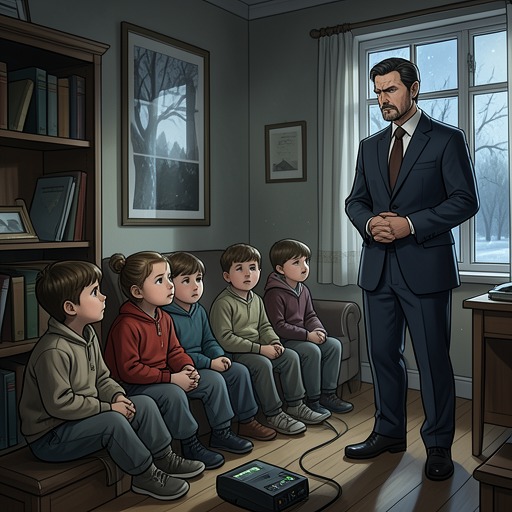
Edith died when Trina was nine. Her older sisters initially tried to care for her, but when Walter began sexually abusing them, they fled. After the older siblings left, his abuse focused on Trina and her sisters Lynn and Lynda. The girls ran away and roamed Chester, eating from garbage cans and sometimes going days without food. They slept in parks and public bathrooms, and temporary stays with relatives repeatedly ended amid violence or death. Even their older sister Edy’s home ceased to be safe when Edy’s husband began sexually abusing them.
The death of her mother, abuse, and instability intensified Trina’s emotional and mental-health problems. When she became severely distressed or ill, her sisters sometimes found a relative to take her to a hospital, but she was penniless and could not stay long enough to stabilize or recover. By the time she faced the event that would reshape her life, her childhood had offered little protection and no sustained care.
The Fire and Life Sentence
In August 1976, when Trina was fourteen, she and her sixteen-year-old friend, Francis Newsome, climbed through the window of a row house in Chester, Pennsylvania. Trina wanted to speak with the boys who lived there, although their mother had forbidden them to play with her. Inside, Trina lit matches to find her way to the boys’ room. The house caught fire and spread quickly; two boys sleeping there died of smoke asphyxiation. Their mother accused Trina of setting the fire deliberately, but Trina and Francis maintained that it was an accident.
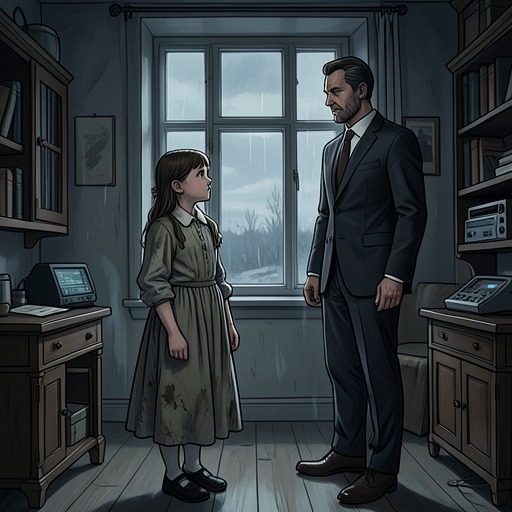
The deaths left Trina traumatized. When police arrested her, she could barely speak, and her appointed lawyer believed she was incompetent to stand trial. Yet the lawyer did not file the necessary motions or present evidence to support an incompetency determination, and did not challenge the decision to try her as an adult. Francis testified against Trina in exchange for having the charges against her dropped. Trina was convicted of second-degree murder and faced sentencing in an adult court, where the circumstances of her childhood and her condition offered no effective counterweight to the mandatory penalty.
The judge found that Trina had not intended to kill anyone, but Pennsylvania law did not allow him to take that absence of intent into account when sentencing a person convicted of second-degree murder. Nor could he consider her age, mental illness, poverty, history of abuse, or the tragic circumstances of the fire. Life imprisonment without the possibility of parole was the only sentence available. The judge expressed serious misgivings about imposing it, calling the case the saddest he had ever seen; still, a fourteen-year-old was condemned to die in prison.
After sentencing, Trina was sent immediately to Muncy State Prison, an adult women’s prison. At sixteen, she entered its gates terrified, still struggling with trauma and mental illness, and knowing that her sentence meant she would never leave. Prison ended the uncertainty of homelessness but exposed her to new dangers. Not long after her arrival, a male correctional officer pulled her into a secluded area and raped her. The assault came to light when Trina became pregnant. The officer was fired but not criminally prosecuted, while Trina remained incarcerated and gave birth to a son. She delivered handcuffed to a bed, and the baby was taken from her and placed in foster care. In the years that followed, her mental health and functioning deteriorated; her body began to spasm and quiver uncontrollably, and she came to need first a cane and then a wheelchair. By thirty, prison doctors had diagnosed her with multiple sclerosis, intellectual disability, and trauma-related mental illness.
Injury, Litigation, and the Possibility of Release
Trina sued the correctional officer who raped her, and a jury awarded her $62,000. The officer appealed, and the court reversed the verdict because he had not been allowed to tell the jury that Trina was imprisoned for murder. The reversal left her without the award, and the state provided no financial aid or services to compensate her for being raped by one of its correctional officers. The case thus added a further injury to her imprisonment: even a jury’s recognition of harm could be undone by a legal process that put her conviction before her claim to redress.
By 2014, Trina was fifty-two and had spent thirty-eight years in prison. She was among nearly five hundred people in Pennsylvania sentenced to mandatory life without parole for crimes they were accused of committing between the ages of thirteen and seventeen. The book describes this as the largest population of child offenders condemned to die in prison in any single jurisdiction in the world. Her case was not an isolated sentencing failure but part of a large system that had made a child’s permanent exclusion from society mandatory.
The Equal Justice Initiative brought a challenge to Trina’s sentence as part of its broader effort to contest life-without-parole sentences imposed on children. While that litigation proceeded, her physical condition continued to worsen. Trina remained at Muncy State Prison, where she sang with a group of women serving life sentences; during the same period, her medical condition was described as deteriorating. In 2012, the Supreme Court ruled that children could not be automatically sentenced to life without parole for homicide. The decision opened a path to resentencing for Trina, although it did not itself guarantee her release.
Trina was eventually resentenced and became eligible for parole. She continued singing with the women at Muncy, whose group performed “This Is Not My Home.” The change was consequential but incomplete: after decades of imprisonment, she had the possibility of leaving, not a guaranteed date of release. Her story therefore ends on a threshold—parole eligibility replacing an irrevocable sentence, while the years and injuries of confinement remain part of her life.
What Her Case Exposed
The challenge to Trina’s sentence belonged to a wider legal effort to make children’s development matter in punishment. More than 2,500 children had been sentenced to life without parole nationwide, so the Equal Justice Initiative concentrated in part on narrower groups that might make constitutional relief possible: the youngest children, those thirteen and fourteen at the time of their crimes, and children sentenced for non-homicide offenses. Fewer than a hundred children under fifteen had received life without parole. Trina, sentenced for a homicide committed at fourteen, fell within the first group.
The argument was not that childhood erased the harm of a crime. It was that adolescents do not yet possess adult experience, judgment, or capacity to imagine consequences, and that these limits can become more consequential amid abuse, violence, neglect, and the absence of reliable care. Trina’s history made visible how far those conditions could precede a child into court, while the mandatory sentence barred the judge from weighing them. Her eventual parole eligibility marked a change in what the law could impose on a child; it could not restore the childhood or decades that the earlier sentence had taken.